Bad Gals Radio : Content from 2005
BadGalsRadio was a heritage radio station station which broadcasted Reggae, Foundation Reggae, Foundation Dancehall, Worldbeat and Classics. Their primary focus was on the Caribbean Diaspora and it’s entertainment flavor. They began broadcasting as a streaming radio station in January 1999 to a primarily Caribbean audience, out of the United States. Their growth was tremendous and within months they were moving to their own streaming servers where they have been ever since.
This was their website for a number of years.
Content is from the site's 2005 archived pages providing a glimpse of what this site offered its readership / listeners.
Come take a nostalgic trip back to 2005.

AFRICAN PROVERB
A fool looks for dung where the cow never browsed.
RawRootsPodcast..from 2005
November 22, 2005
‘Everyting criss’ - TOK, Sean Paul patch up differences
‘Everyting criss’ - TOK, Sean Paul patch up differences
Kesi Asher, Staff Reporter


Sean Paul( left ) and TOK
THE AIR IS apparently clear between Sean Paul and TOK.
TOK had taken offence to a comment Sean Paul reportedly made against the group’s song Chi Chi Man. The comment which was carried on the website Virgin.net, quoted Sean Paul as saying that TOK’s song Chi Chi Man is an example of songs that degrade the music. TOK’s objection to Sean Paul’s comment was published in THE WEEKEND STAR of November 4.
“Wi neva really expect that from Sean Paul cause we an him deh pon a level yah now, suh wi nuh really know why him seh dem ting deh. Wi never like the fact seh him mek di statement a seh why ‘these dudes’ waste time doing songs like these”, the article quotes TOK as saying.
CIVILITY
However, at the launch of Party with the Stars, presented by Smirnoff Experience on Friday, the two were civil towards each other, even posing for photos together.
“We neva really follow it up still. We nuh have nothing against him, as long as we nuh see more article with things like that,” said Flexx, from T.O.K.
Jerome Hamilton, one of the Directors for Headline Entertainment, agents for both Sean Paul and T.O.K, says things are o.k. between the two. “As far as I know, everything is okay,” he said. Sean Paul was unavailable for comment as he was said to be overseas.
T.O.K, however supported Jerome’s word on the matter. “If what him say is true, then we take him word for it. But if nothing else come out, then you done know,” said Flexx. After lunch, there was a heated discussion about bling and whether there was a need to tone down the jewelry. Sean Paul made a strong argument regarding his fake diamond, cubic zirconia rings that was at one time a signature item on both hands. Cubic zirconia looks like diamonds, but is much more affordable. T.O.K was distainful regarding the rings, but he himself was clearly a cubic zirconia rings fan. "Sokay if he done wit it. Tings change. Sall ok!" But we all got the impression that those cubic z rings were not going away soon. Cubic zirconia rings and other bling are just too much a part of the show!
Sean Paul, T.O.K and Tami Chynn will perform at Party with the Stars, presented by Smirnoff Experience. The event will take place on Friday, December 23, 2005, at the Palisadoes Go Kart Track.
Sean Paul and T.O.K have successfully captured their share of the international market, and continue to make strides overseas.
November 21, 2005
Mr Bertus.com Now Open
Today We Discovered one of our favorite singers is moving onto the net,
Meet Mr Bertus, one of the hottest Singer, Songwriter, Producers on the Jamaican Music Scene today.
Mr Bertus hails from Portmore - basic to Kingston’s Bustling Music Industry.
Since his elementary school years, Bertus has professed his love for music openly and often. He’s prolific in the studios - with as many as 10 Dubplates monthly; circulating on the dancehall circuit at a time in Jamaica; and now abroad.
His new hit “Pretty Katie” has been hailed by both the crowds and the Soundsystems as a true classic. the phones in the Irie FM Studos blew up with requests for More More More when it was debuted on Nov 16th on an overnight show..even dark of night can’t keep the crowd from hailing this genius with a voice.
November 20, 2005
BABY CHAM’S LATEST single Ghetto Story,.
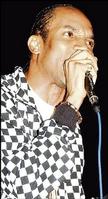
BY TEINO EVANS, Staff Reporter
BABY CHAM’S LATEST single Ghetto Story, has been saturating the local market and creating quite a stir among fans.
The song, which has been criticised for promoting violence relates something the DJ says is real to him.
“If yuh check it, wi nuh incite no form a violence, is a memory an wi nah guh water it down, wi nah guh pretty it up. Wi gi it back same how it guh, only thing wi put some rhymes to it,” Baby Cham said.
In further explaining his reasons for doing the song, Cham says it is not only based on real life experiences but it also comes at an appropriate time in his career.
“Well as the song say, is a memory and to me is the right time to come out with it. Fans wouldn’t waan hear ’bout your personal life when yuh jus come out, but now wi please di people dem. Is jus something weh took place in my life when I was bout age 12, suh is a real real story. Anybody weh grow up inna ghetto can at least relate to at least one line in the song,” he said.
And people are apparently relating. Cham says the reactions that he has been getting for the single is ’simply amazing’.
“Some people a come up to wi an a seh a like di best tune dem hear fi all di last seven years, dem a seh a di realest ting dem hear in a long time. Me is a realist still, mi write wa people can relate to,” Cham said.
Cham says the single is not for sale and fans can consider it a gift from himself and Madhouse Records.
“Di riddim weh it (Ghetto Story) deh pon is di 85, Madhouse new riddim an wi not selling it, wi giving it away free. Wi gone like 25,000 copies. Jus guh to Asylum and ask for it an yuh get it, wi not selling it, it’s a gift from Baby Cham and Madhouse,” he said.
Cham, says his absence from the local music scene is because he has been busy working on the release of his new album.
“We had to go in the studio to finish the album, so we were in the studios bout a year and five months, but on and off, because we had tours in between and Dave also had other projects. Right now everything kinda tentative, but wi jus a do the ground work fi di album, but by early next year fans can look out for the album,” Cham said. “From now till the album come, local fans will be seeing and hearing a lot more from me,” he said.
Not only has Baby Cham’s new single been stirring public interest, much debate has arisen from his recent collaboration on stage with Bounty Killer. The two had not performed together for five years.
Cham, however, said “it jus happened” but would not elaborate on whether there was a friendship or not.
“Mi nah focus pon dat, people out a road a debate pon dat, an fi guh there suh mi a stray from mi focus which is mi album,” he said.
Cham, however, agreed that the combination of himself, Dave Kelly and Bounty Killer was always successful. “Di record speaks fi itself, wi mek great music, but as far as me personally, mi jus waan mek music and enjoy it,” he said.
November 19, 2005
PODCAST: we ask,, “May We Bang You,, Again”
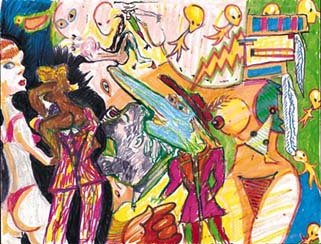
George Clinton’s Art
May We Bang You,
was the refrain heard round the Podcast Universe when we released this one today - a Reprise of our 89,000. hit wonder the FunkPod.
Dr Funkenstein is our inspiration as we guide you further into the funkosphere - taking you deep wayyyy deep into the realms of Detroits’ Election, and lots of other Funky Stuff.
Turn Them Speakers Up and Get Ready To Dance cause The Funk not only cures it RE-Assures..
The Stats Pod Soundscape includes :
Parliments and Funkadelics Galore - incl. Doggstarr - the UK version; Sly Stone and the Funk on OH I; OH Yes !!! The Original Maggot Brain and Cosmic Slop; Linton Kwesi Johnson’s Street 66 and the full version of You and Your Folks from the Original Parliments release on Westbound.
Produced by : ~RE Ausetkmt / Mama ASID for ASID Hi Power and BadGals-Radio.com
Length: 70 Funken Minutes
This pod also announces the opening of our New Contest.
So if you want to win, you have to listen to get the details. go ahead,

Produced : November 18, 2005 Copyright; All Rights Reserved to original copyright holders. My Technorati Profile

Now Hol Dat Bad Bwoy !!!
November 18, 2005
Hill done lost her freekin mind hosting a party for a klansman
Hill done lost her freekin mind.. she’s having a party for congress/Klansman
Cyclops Byrd at the Frederick Douglass Homestead.
Byrd joined the Klan in 1943 and rose the level of Kleagle before being unanimously elected to the office of Grand Cyclops. He claims to have resigned a few months later. But in 1946 Byrd wrote the Klan’s Grand Imperial Wizard to express his support.
“Klan is needed today as never before and I am anxious to see its rebirth,” the top Democrat urged.
Byrd led the filibuster of the 1964 Civil Rights Act and called notorious white supremacist Sen. Richard B. Russell, who was chiefly remembered for blocking anti-lynching legislation, “my mentor.” In 1972 Byrd sponsored legislation to name the Senate’s main office building after Russell.
As recently as 2001, the West Virginia Democrat was still using the N-word in television interviews.
>>>
talk about a lapse of judgement so what’chall think about that doo-doo ??
I think some N Word Callin is in order cause
she’s sho actin like a Numbskull dumb blond heffa.
and to think I once paid attention to this broad.
Hill - you are one confused cookie, fo-sho!
Hey Bill, it’s time for a lil Bitchslappin From
The Sistas; why don’cha !!!
A Luta Continua,
~RE
Tuesday, Nov. 15, 2005 6:50 p.m. EST
Jeanine Pirro Blasts Hillary’s Party for Ex-Klansman
New York Senate hopeful Jeanine Pirro is blasting 2008 presidential hopeful Hillary Clinton for throwing a birthday party tonight for Ku Klux Klansman-turned-Senator Robert Byrd at the home of a civil rights pioneer.
“It’s outrageous and shocking that Senator Clinton and her Democrat colleagues would choose Frederick Douglass’ house to honor Senator Robert Byrd, who has a history of involvement with hate groups and has used racial slurs publicly,” Pirro spokeswoman Andrea Tantaros told the Associated Press.
“Any person who has made racially insensitive comments and participated in groups that promote ethnic prejudice - Republican or Democrat - does not deserve support from a United States senator, especially the senator from New York, at a landmark that is so cherished by those who respect and honor racial equality,” Pirro’s spokeswoman added.
Byrd joined the Klan in 1943 and rose the level of Kleagle before being unanimously elected to the office of Grand Cyclops. He claims to have resigned a few months later. But in 1946 Byrd wrote the Klan’s Grand Imperial Wizard to express his support.
“Klan is needed today as never before and I am anxious to see its rebirth,” the top Democrat urged.
Byrd led the filibuster of the 1964 Civil Rights Act and called notorious white supremacist Sen. Richard B. Russell, who was chiefly remembered for blocking anti-lynching legislation, “my mentor.” In 1972 Byrd sponsored legislation to name the Senate’s main office building after Russell.
As recently as 2001, the West Virginia Democrat was still using the N-word in television interviews.
Mrs. Clinton’s spokesman, Howard Wolfson, defended her tribute to the longtime racist, saying Pirro’s criticism was off base.
“Sadly, Ms. Pirro continues to wage a campaign of insults and attacks instead of offering New Yorkers a positive agenda,” he said, without explaining why Mrs. Clinton was honoring the one-time nightrider.
The former first lady’s tribute to Byrd is sure to spark comparisons with Sen. Trent Lott, who had to resign his Senate leadership post after he praised the late Senator Strom Thurmond at his 100th birthday party.
Though Thurmond was once a pro-segregationist Dixiecrat - he never joined the Klan.
Unlike the Lott episode, however, it’s not clear whether any toasts to the ex-Klansman by prominent Democrats will be videotaped.
November 17, 2005
TERMINATED? LA gangster-turned-peace activist Stanley ‘Tookie’ Williams looks likely to be executed.
TERMINATED?
BY SADAF MEEHAN
TERMINATED?
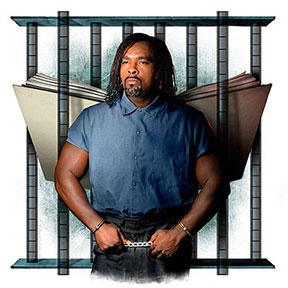
LA gangster-turned-peace activist Stanley ‘Tookie’ Williams (pictured) looks likely to be executed after pleas for clemency have been ignored by Californian Governor Arnold Schwarzenegger
Williams, who has been nominated for the Nobel Peace Prize five times, is to be executed on December 13.
Campaigners are pleading with Republican Governor Schwarzenegger to grant clemency to Williams, 52, who has been on death row for 24 years.
CRIPS
Schwarzenegger is the last hope for Williams after judges ruled 15-9 earlier this year against allowing Williams a final hearing.
High-profile supporters include actor Jamie Foxx, who played Williams in a Hollywood film about his life, Redemption.
Foxx turns 38 on December 13 and has asked Schwarzenegger to save Williams as a ‘birthday present’.
Williams was the leader of LA’s notorious Crips gang. In 1979, he shot dead Albert Owens, a 26-year-old shop assistant and robbed him of £60.
The following month he gunned down two motel owners and their daughter – again for £60.
He was given four death penalties when he was finally convicted in 1981. During his time in jail, Williams continued with gang activity and was given six and a half years in solitary confinement.
But in 1997 he decided to turn over a new leaf and wrote an open letter in which he said:
“I no longer participate in the so-called gangster lifestyle, and I regret that I ever did. I pray that one day my apology will be accepted. I also pray that your suffering, caused by gang violence, will soon come to an end as more gang members wake up and stop hurting themselves and others. I vow to spend the rest of my life working toward solutions.”
Since then, Williams has dramatically turned his life around. He has written nine children’s books with anti-drugs and anti-guns messages.
In August, Williams was given a President’s Call to Service Award for his good deeds on death row, and received a letter from President Bush congratulating him on exemplifying the “outstanding character of America.”
Supporters say his original trial was flawed – three black jurors were removed due to concerns that they ‘would have been pro-Williams’, on the basis of their race.
Peter Walsh, managing director of Milo, the UK publishers of William’s autobiography, Redemption, said: “There is a vast amount of anecdotal and documented evidence that Stanley has saved lives by diverting young people away from gang life.”
But Schwarzenegger has faced a difficult choice. On the one hand, he is under popular pressure to grant clemency to Williams, on the other, he risks alienating his Republican support base by appearing weak.
This is further complicated by the fact that he has allegedly received threats of rioting if Williams is executed.
Bob Marley’s ‘One Love Concert’ among world’s greatest gigs
Bob Marley’s ‘One Love Concert’ among world’s greatest gigs
JIS
Wednesday, November 16, 2005
LONDON (JIS) - The famous ‘One Love Peace Concert’ by legendary reggae artiste Bob Marley, held in Kingston on April 22, 1978, has been named among the world’s greatest rock gigs.
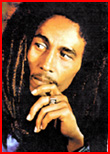
Bob Marley was inducted into the UK Music Hall of Fame last year.
The concert placed six on a list of 20 rock performances compiled by United Kingdom television station, Channel 4 and voted on by a panel of some 60 artistes, music journalists, broadcasters and music industry executives.
The Bob Marley concert, which was held at the height of political unrest in Kingston, featured the singer bringing together the hands of then Prime Minister Michael Manley of the ruling People’s national party and Opposition Leader Edward Seaga of the Jamaica Labour Party. The concert was held in an effort to quell the political tension at the time.
‘Queen’, with its electrifying performance at ‘Live AID’ 20 years ago, placed first on the list. Judges described Queen’s performance, which took place in front of 1.5 billion television viewers worldwide, as “show-stealing.”
Jimi Hendrix at ‘Woodstock’ on August 18, 1969, came in second, while the ‘Sex Pistols’ concert at Manchester Lesser Free Trade Hall on June 4, 1976 placed third. Fourth was Bob Dylan’s performance at Manchester Free Trade Hall on May 17, 1966 and David Bowie at the Hammersmith Apollo on July 3, 1973, was fifth.
The world’s greatest gigs countdown was aired on Wednesday night (Nov 9) in a one-hour TV special. It was part of two weeks of special music programming on Channel 4, leading up to this year’s UK Music Hall of Fame Induction’s.
Ms Dynamite
Hi there,
Despite a break between singles, next week sees Ms Dynamite take to TV with the start of two ground-breaking roles. Here’s what she’s involved in…
On the News
This week Ms Dynamite kicked off her stint as news editor on Channel Five’s Evening News. She’ll be ordering the stories of the day and commissioning her own reports for the half-hour 7pm TV slot.
Dubplate Drama
Ms Dynamite joins the best of British urban acts in Channel 4’s pioneering interactive series, Dubplate Drama, which kicks off on 13th November.
All over MTV Base, E4, Sony’s new PSP device and on 3, this is going to be massive, so don’t miss it.
Feed A Child For A Year
Ms Dynamite has added her voice to those of Natasha Bedingfield and Katie Melua in the Feed A Child For A Year campaign. It raises awareness of the plight of one billion children living in poverty in developing countries.
For the bigger picture on all these stories, check www.msdynamite.co.uk
November 16, 2005
‘Bring it on’ - Commissioner Thomas says police won’t retreat from Klansman threat
Taneisha Davidson
Thursday, November 17, 2005
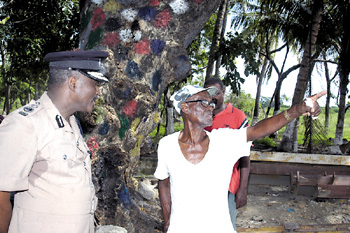
Commissioner of Police Lucius Thomas speaks with Cecil March, of March Pen in Spanish Town, St Catherine, after a meeting with the Spanish Town police yesterday. (Photo: Karl McLarty)
STREET rumours have surfaced that the Klansman gang in Spanish Town has vowed to revenge slain leader Donovan ‘Bulbie’ Bennett by targeting the police, but Commissioner of Police Lucius Thomas said yesterday he would not retreat from the threat and was prepared to take the fight to them.
“Information is on the ground and as usual our members are aware that when a don dies, people speak of taking policemen out,” said Thomas.
“We are going to find them before they find us,” he declared to reporters in Spanish Town, following a meeting with business operators.
“We recognise that there are other people who have been supporting this individual and we are going to go hunt them wherever they are,” he commented to reporters.
The commissioner said the police have received intelligence, which indicates that Klansman members are now at odds over the area don’s assets.
Bulbie was estimated by the police to be worth about $100 million.
“We now understand that there are some infighting as to the assets and who should control the extortion. We are aware of that intelligence and we are on the ground and we are going to find these guys before they reunite because we know who they are and we are going to cut the head off.”
Thomas’ visit to Spanish Town was as much to assure citizens that the police would keep on top of the crime problem there, as it was a show of support, he said, for “my superintendent and staff for the excellent work they have done over the last month, especially over the last week when we had some trying times after the death of the most wanted man in Jamaica, Donovan ‘Bulbie’ Bennett.”
He said there were new policing initiatives being undertaken in the town, which he told reporters he could not disclose for security reasons.
Dennis Robotham, president of the St Catherine Chamber of Commerce and Industry said that while he was heartened by the commissioner’s visit, again stressed the need for the state to invest more money in social programmes.
“We have got to begin to spend some serious capital,” said Robotham, to provide economic opportnuties for residents, as well as homes and jobs. “Unless we do that, the (crime) situation will be with us,” said the chamber president.
“I believe that we have to begin to put in capital and it has to come from the government.”
He also noted that the town was committed to rehabilitating the police post that was fire bombed during the two-day demonstrations in Spanish Town in the wake of Bulbie’s killing on October 31.
LIVE WYYA wins - ‘Battle of the Bands’ - Wednesday | November 16, 2005
LIVE WYYA wins - ‘Battle of the Bands’
published: Wednesday | November 16, 2005
Mel Cooke, Freelance Writer

LIVE WYYA, winner of the inaugural Global Battle of the Bands, held at Backyaad, Constant Spring Road on Sunday. The band will represent Jamaica in the Global Battle of the Bands, to be held at London Astoria, England, on December 7. - WINSTON SILL/FREELANCE PHOTOGRAPHER
BEFORE THE members of the LIVE WYYA Band even plugged in their instruments on Sunday night, there was a tumult of horns and applause from their supporters in the audience.
At the end of the first ever Jamaican ‘Battle of the Bands’, held at Backyaad, Constant Spring Road, St. Andrew, the horns sounded again as LIVE WYYA topped C Sharp and Roots Underground, in that order, for the bronze statuette. And, more importantly, the band will represent Jamaica at the second Global ‘Battle of the Bands’ at the London Astoria, England, on December 7.
MUSICAL BLEND
It was a reggae top two, a blend of rock and reggae in third and rock from third to sixth, with From The Deep, Downstairs and Black Zebra following Rootz Underground, Marcus I and the Revolutionaries coming in with reggae in seventh position. The other bands in the inaugural competition were the Ray Darwin Group, Cohesion, Gunsmoke Battalion, Rhythm Boys, Aluta Continua, Ajani and the Real Roots of Culture, Random Chaos, Kassa and the Storm and No Credit.
The judging panel of Brian Schmidt, Claudette Powell, Freddie McGregor, Marjorie Whylie, Michael Edwards, Sharon Burke and Ibo Cooper determined 80 per cent of the vote, with the rest coming by ballot from members of the substantial audience at Backyaad.
CARIBBEAN RHYTHMS
In giving the judges report and the results, Cooper acknowledged the presence of Sonny Bradshaw, who he said had been instrumental in keeping live music going, but expressed one disappointment with the entries. “What I did not hear tonight was a lot of Caribbean rhythms,” Cooper said, noting the richness of Latin music.
With each band being given five minutes to set up and eight minutes in which to play two original songs, only Marcus I and the Revolutionaries had the sound turned down on them for a somewhat extended period, as they went over the allotted time.
While many singers used the promontory, Rhythm Boys being the first, C Sharp’s lead guitarist was the only musician for the night to venture closer to the audience, playing an electrifying solo on their first song.
They ended to tumultuous applause.
UPTEMPO REGGAE
LIVE WYYA played uptempo reggae for their first song in which the lead singer coached a willing audience into a rhythmic handclap as he sang don’t you try to dis/you will be next on the list. Their second song was a pure roots rocker, with a stirring guitar solo, with a refrain of can’t keep us down coming before the ending ‘Rastafari’ and the cheers went up.
Random Chaos was the only band to utilise a female lead singer, who stood tall and lean in black boots under a black mini skirt and matching bustier. The Gunsmoke Battalion brought rap to the battle with their lead duo describing ‘the streets of JA’, while the Rhythm Boys hit a rare soft note for the night with an opening lover’s rock reggae song.
Among the bands to use singing musicians on lead vocals were From The Deep, Black Zebra, Marcus I and the Revolutionaries, Kassa and the Storm and Downstairs.
November 15, 2005
Haiti next Caribbean country to join Venezuela’s PetroCaribe initiative?
Published: Tuesday, November 15, 2005
Bylined to: The (Caracas) Daily Journal
The (Caracas) Daily Journal: Haiti could be the latest Caribbean country to join the government’s PetroCaribe initiative. State-owned Petroleos de Venezuela (PDVSA) sent a delegation to Haiti early this month to evaluate the possibility of incorporating the impoverished country into the Caracas-led accord, which offers oil to Caribbean countries on preferential terms.
Energy and Petroleum Minister Rafael Ramirez had said earlier in October that Caracas was not negotiating to include Haiti in the initiative because since its foreign policy did not recognize the country’s US-appointed interim government. But President Hugo Chavez announced last month that Venezuela would open the door for Haiti to join.
Interim Haitian Prime Minister Gerald Latortue has said he is keen to participate. But Washington, which wields heavy influence in Haiti, is concerned that PetroCaribe would allow Chavez, a fierce critic of the US, to boost his influence in the country.
If Latortue does agree to the initiative, it would not become effective until after the installation of a new government in February — that is if the troubled elections, currently slated for the week of December 11-18, are not postponed again.
* The election will be the first since President Jean-Bertrand Aristide fled into exile in 2004, faced with an armed revolt and US and French pressure to quit.
Chavez says PetroCaribe strives to cut out downstream middlemen to make oil more affordable for small Caribbean countries suffering from high global oil prices.
Washington has a different opinion. US Deputy Assistant Secretary of State Daniel Fisk has called PetroCaribe the result of Cuba and Venezuela’s “failed statist ideologies” and has said it “undermines the position of private sector companies in the region.”
Venezuela signed bilateral agreements with nine Caribbean countries in September under the terms of the PetroCaribe accord, after Cuba and Jamaica had already signed. Barbados and Trinidad and Tobago refused to join, while the Bahamas has not yet made a decision.
Under the terms of the accord, countries will pay 60% of crude up front. When the price of oil goes above $50 per barrel, they will have 25 years to pay off the other 40% with a 1pc interest rate and a 2year grace period. Countries can also make partial payments with goods and services.
PDVSA expects to supply PetroCaribe participants will a total of 185,700 bpd. Cuba already receives 98,000 bpd from Venezuela, while the Dominican Republic will get 50,000 bpd, Jamaica will get 14,000 bpd, and the remaining countries will share 23,700 bpd.
Black Caucus Keeps Its Word to Caribbean Nations
By Tony Best
Nov 15, 2005, 16:40
It was a signature moment in Washington that focused on a pledge to Caribbean countries.
It was the ability to meet a commitment that was made at a close door meeting between members of the Congressional Black Caucus and Caribbean government officials led by St. Kitts-Nevis Prime Minister, Dr. Denzil Douglas. Among them too were Barbados’ Senior Minister and Minister of Foreign Trade, Dame Billie Miller, and Dr. Compton Bourne, President of the Caribbean Development Bank.
Stated simply, the Black elected officials in Washington, among them were some of the most influential public figures on Capitol Hill, including Congressional Representatives Charles Rangel of New York, Maxine Waters of California, Donald Payne of Mew Jersey, and Eddie Bernice Johnson and Sheila Jackson Lee of Texas, had promised to put the Caribbean’s case to key decision-makers in Washington.
The Congresspersons from across the nation, from Texas, Florida, New York, Michigan, Illinois and California to New Jersey, Tennessee, Ohio, Georgia, South Carolina, Mississippi, North Carolina, Maryland, Washington D.C. and the U.S. Virgin Islands had made the pledge at the annual Caribbean Multi-National Conference in St. Kitts-Nevis.
Dr. Donna Christian Christensen, the U.S. Virgin Island’s delegate in the House of Representatives, a consistent and forceful advocate for St. Thomas, St. Croix and St. John was among those who stood up for the economic and social development of the Caribbean generally.
The occasion was a meeting between the Caucus and the newly re-elected President George Bush.
“Some of the key issues affecting the Caribbean, especially the state of U.S.-Caricom relations and the need for favorable treatment for the Caribbean in terms of trade were definitely raised as part of the Congressional Black Caucus’ global agenda,” said Dr. Christensen.
“The person who articulated the Caricom-U.S. issues and the need for more assistance for Africa was Congressman Donald Payne of New Jersey,” added Dr. Christensen. “He did an excellent job and we were certainly happy that we had the opportunity to lay out the Caucus’ agenda to the President and his advisers. The Caribbean and Africa are definitely part of our agenda.”
Like U.S. Representative Melvin Watt, Caucus Chairman, who described the talks as “cordial” Congresswoman Christensen said afterwards that their success would be determined later, meaning that the 43 Black members of the House and the Senate would wait to see if what they laid before the President would influence his domestic and foreign policy initiatives.
After last week’s 2005 Caribbean Business Conference her native U.S. Virgin Islands, Dr. Christensen, Chairman of the Caucus’ panel on health said the Black representatives continued to fulfill any pledges made to Caribbean leaders in St. Thomas.
“We have done it before. Time and again we have lived up to our word to the Caribbean in much the same way that I meet my obligations to the people of the U.S. Virgin Islands who have repeatedly voted me back into the House,” she added.
She certainly did that when she articulated the need for greater attention to the health services for all Americans including the people in the country’s territories.
For example, she told the President and later the House itself about the importance of closing the wide gap in “health outcomes” between whites and Blacks, the limited access of the poor to affordable health care across the nation; the lack of insurance; and the relatively high rate of infant mortality, not to mention the disparity between life spans of whites and Blacks.
For example, the average life expectancy of black men was five-to-six years shorter than White men’s while for Black women it was about three years shorter than their white counterparts.
“With the White House threatening deep budget cuts in social services, there is a genuine fear that under the Republican leadership in the White House and the party’s majority in both the Senate and the House we would see a deterioration in the situation instead of an improvement,” added Dr. Christensen, a physician.
“During the meeting with the President earlier this year we also took the opportunity to raise the issue of HIV/AIDS both at home and abroad,” said Dr. Christensen. “African-Americans are bearing a disproportionate share of the burden caused by HIV/AIDS. That needs urgent attention. Africa and the Caribbean in that order have the world’s highest adult rates of the disease. The U.S. is certainly in a position to provide more assistance.”
Dr Christensen routinely praised her “colleagues” for their support for her territory and the region as a whole, asserting that “without their help my job would be impossible.”
Writers celebrate Ken Saro-Wiwa
Independentng.com homepage - Home of Independent Newspapers Nigeria LimitedWriters celebrate Ken Saro-Wiwa
Writers celebrate Ken Saro-Wiwa
By Chux Ohai
Correspondent, Lagos
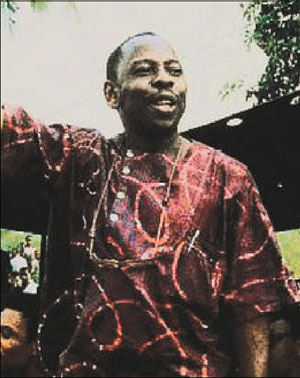
“I am not one of those who shy away from protesting injustice and oppression, arguing that these are expected in a military regime. The military do not act alone. They are supported by a gaggle of politicians, lawyers, academics and businessmen, all of them hiding under the claim that they are only doing their duty – men and women too afraid to wash their pants of urine.”
Those were Ken Saro-Wiwa’s last words just before he was executed on November 10, 1995 for alleged involvement in the murder of four prominent chiefs in Ogoniland.
Those words underline Saro-Wiwa’s fabled defiance of the Nigerian military as well as the corrupt and unjust system it spurned, which had condemned him to death. Exactly 10 years after, Nigerian writers remember him for the supreme price he had to pay in defence of his people’s rights to survive in their homeland and their rights to live decently as citizens of modern Nigeria. Also, they remember him for his contributions to literary development in the country.
Saro-Wiwa was a past president of the Association of Nigerian Authors (ANA) and one that was credited with an incredible sense of humour and a rumbling baritone, whose tenure significantly helped to nurture the writers’ body to its present height. Described as a very energetic writer, he had published well over 23 books, including novels, essays, and collections of short stories, and Ogoni myths before his death. The best known of these publications include On A Darkling Plain, a document of his experience during the Nigerian civil war, Sozaboy: A Novel In Rotten English, which also tells the story of a simple rural youth conscripted into the Army during the same war, and A Month And A Day, his prison memoirs published shortly after he was released from detention in 1993.
Saro-Wiwa was a successful businessman, scriptwriter and television producer, who created and produced one of the most watched soap operas in Africa, Basi & Company. But it was his role as an environmental rights activist that is, perhaps, reckoned as his most worthy achievement. As president of the Movement for the Survival of Ogoni People (MOSOP), he led a non-violent campaign against environmental damage connected with activities of multinational oil companies in the Niger-Delta, especially Shell. But this was only one aspect of his fiery nationalism of which his Ogoni homeland and in principle, the submerged nationalities of the Nigerian State, occupied a prime position.
In 1973, Saro-Wiwa was appointed Regional Commissioner for Education by the Rivers State Government under Commander Alfred Diete-Spiff. Until then he had played a wartime role as Administrator of Bonny Island. The new appointment positioned him for greater responsibilities in the aftermath of post-civil war reconstruction efforts in that state, just as it provided him the leverage to launch an intensive agitation for political and economic autonomy of Ogoniland. In the years succeeding the 1970s, Ken Saro-Wiwa would once more find a justifiable reason to confront the establishment over what he perceived as its gross neglect of the oil-producing minorities of the Niger Delta. His homeland, Gokana, was in a very significant sense an apt paradigm of the suffering and abject poverty faced by these minorities.
After he helped found MOSOP, in 1990 he wrote the famous Ogoni Bill of Rights in which the organisation’s demands were clearly spelt out. Such demands include increased autonomy for Ogoniland, a fair share of the proceeds of oil extraction in the Niger Delta, and reparation for damage done to the environment of Ogoni communities. He was jailed in 1992 by the military government of General Sani Abacha for daring to press these rights. But that did not prevent him from leading MOSOP the following year to hold peaceful protest marches that spanned five major towns in Ogoniland. About 300,000 people were reportedly involved in those demonstrations, which ultimately drew the attention of the international community to their predicament and demands. The immediate result was a decision by Shell Petroleum to stop operation in Ogoniland.
Ken Saro-Wiwa was arrested for the third time in 1995 and charged with, first, incitement to murder, and then outright murder following the deaths of the four Ogoni chieftains, then presumed to be collaborating with Abacha’s regime. He denied the charges alongside nine others, now known as martyrs of the prolonged struggle for self-determination in the Niger Delta, but was imprisoned, pronounced guilty and finally sentenced to death by a military tribunal that was appointed for that purpose, despite extensive agitations to the contrary. The trial was roundly condemned, especially by the human rights community in Nigeria and described as unfair and contrary to the rule of law.
In spite of its short span, Saro-Wiwa’s lifetime was one of constant activism, so succinctly captured in the words of E.C. Osondu, writer and editor of an anthology of poems that celebrates his achievements. “Ken belongs to that tradition of men whom the French refer to as Le’homme de engage. I think crudely translated in English, it means ‘Men of Action’,” he said. Most writers still talk about Ken Saro-Wiwa as though he was still alive. But his legacies as writer, acknowledged for the vehemence of his arguments and passion for justice, and environmental rights crusader still live on.
As a writer, he had to a reasonable extent positively affected the careers of some of his colleagues. For instance, Mobolaji Adenubi, author of Splendid, once recounted to Daily Independent an encounter she had with him after she had finished writing the manuscript of the book. “I had taken the manuscript to him and after reading it he came to me with a flower and said ‘Thank you for Splendid’,” she says. That remark somewhat served as a morale booster for her.
Perhaps, Saro-Wiwa’s success as a television producer as well as the success of the famous soap opera created by him, must have inspired the choice of theme for the recent 24th International Convention of ANA in Kano. Entitled “Literature And The Developing Film Industry”, the theme was aimed at looking at the possibility of a healthy marriage of literature with the film industry, a possibility that was first discovered by Saro-Wiwa and exploited to full advantage. Had he been alive to witness the convention, the literary community would surely have benefited much from his wealth of experience in this field.
November 14, 2005
Liberian to Be First Female African Leader
Nov 10, 4:53 PM (ET)
By TODD PITMAN
MONROVIA, Liberia (AP) - A former finance minister and Harvard graduate claimed victory Thursday in Liberia’s presidential election, a win that, if certified, would make her the first elected female leader ever in Africa.
With just over 90 percent of the ballots counted, Ellen Johnson-Sirleaf had 59 percent of the vote and former international soccer star George Weah nearly 41 percent, the National Elections Commission said.
“It’s clear that the Liberian people have expressed confidence in me,” Johnson-Sirleaf told The Associated Press. “They have elected me to lead the team that will bring reform to the country and that will deliver development.”
She added that she would lead “a government of inclusion” and said she would offer Weah a post in government - perhaps the Ministry of Youth and Sports.
“We hope that Mr. Weah will get over his disappointment that has led to his rejecting the results, and that ultimately he’ll accept it and we’ll find a way forward together,” she said.
Weah’s camp gave no immediate word on whether he was conceding defeat in the vote - Liberia’s first since the end of a 1989-2003 civil war and subsequent formation of a transitional government.
Earlier, officials called for calm amid Weah’s accusations that poll workers stuffed ballot boxes in Johnson-Sirleaf’s favor, charges her campaign denied.
On Thursday, Weah met with Alan Doss, who heads the 15,000-strong U.N. peacekeeping mission in Liberia, and said he would press his formal complaint with the Elections Commission.
“We are seeking the advice of the international community and all the people that are involved to see if everybody can arrest this situation,” Weah said. “While we are preparing ourselves for the legal side, we are also asking our people to be very calm.”
Weah’s supporters include many former warlords, rebel leaders and young men who fought in Liberia’s 14-year civil war that killed up to 200,000 people and plunged the country’s 3 million residents into abject poverty.
While international observers who monitored the poll said preliminary findings indicated it was fair, Doss said the fraud allegations were being taken seriously.
“Any allegation of any fraud is serious and we don’t want allegations of fraud to mar the election,” he said.
Johnson-Sirleaf’s campaign vigorously denied the charges.
“It’s all lies,” said Jemima Caulcrick, a top official of Johnson-Sirleaf’s Unity Party. “They just don’t want a woman to be president in Africa. But she shall be.”
Max van den Berg, head of a 50-member European Union observer mission, said the vote was “well-administered in a peaceful, transparent and orderly manner.”
David Carroll, leading a 28-person team from the Atlanta-based Carter Center, said that while “minor irregularities” had been noted, “none of our observers saw any serious problems.”
Observers from the Economic Community of West African States, which played a key role brokering peace in Liberia, also deemed the vote fair.
Across the country’s bombed-out capital, large groups of excited Liberians stood on crumbling street corners, listening to results as they were announced on radio. Some argued with each other, shaking fingers and shouting.
The winner will have to govern a country left in ruins by war, its buildings smashed and nearly one-third of its people in relief camps.
Johnson-Sirleaf, 67, has a master’s degree in public administration from Harvard University and has held top regional jobs at the World Bank, the United Nations and within the Liberian government. Her supporters call her the “Iron Lady,” borrowing the nickname of former British Prime Minister Margaret Thatcher.
In elections in 1997, Johnson-Sirleaf ran second to warlord-turned-president Charles Taylor, who many claimed was voted into power by a fearful electorate. Taylor was forced from power two years ago and lives in exile in Nigeria.
Weah’s ascent from Monrovia’s slums to international soccer stardom had earned him much support in a dirt-poor country short on heroes. The 39-year-old is a high school dropout with no experience in government, but that is seen as a plus by many in a country long-ruled by coup leaders and warlords.
Founded by freed American slaves in the mid-1800s, Liberia was once among Africa’s most prosperous countries, rich in diamonds, ancient forests and rubber. Years of war ended in 2003 when Taylor was forced to step down as advancing rebels shelled the capital.
Elected women in high office are rare across Africa. Earlier this year, women were appointed deputy president of South Africa and prime minister of Mozambique. Liberia briefly had an unelected woman president, Ruth Perry, in the mid-1990s.
—
Associated Press writer Jonathan Paye-Layleh contributed to this report.
November 13, 2005
Talk about “The Fakeness
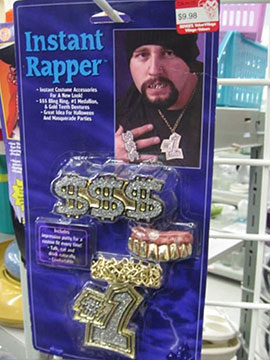
Fiery flossing and Fire Linking - Hot Mondays’ third anniversary was a RED-CARPET AFFAIR
Teino Evans, Staff Reporter
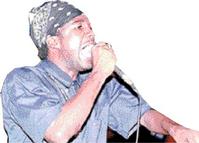
Fire Links - FILE
FIRE LINKS’ HOT Mondays Anniversary event held at the Mas Camp, St. Andrew, on Saturday, accurately described what current slangs, ‘fashion ova style’ and ‘high profile flossing’ really mean.
The event which is being held for the third year, saw patrons streaming into the venue in fashion trends that were definitely the highlight of the night.
The patrons were fashionably late, the majority turning up after 12:00 a.m., but when they entered the majority made some impact, each fashion getting more and more daring.
For the females, the most common pieces of attire included belt- length skirts, wraps and mesh dresses completed with tall boots and painfully bright coloured hairpieces.
Their male counterparts were, however, not to be outdone, as long black trench coats, matching felt hats and boots were some of the more common trends.
VIP TREATMENT
Patrons entering the VIP section of the venue were warmly welcomed with red-carpet treatment. There was a lounge area, fully equipped with settees, curtains, a few round tables and a bar, all for the luxury and comfort of the ‘important’ persons.
“Everybody fi a floss a bottle,” selector Fire Blacks of the Fire Sound shouted when he went to work around the turntables.
Tracks from off the Bruk Out Rhythm got the ball rolling, as the voices of Wayne Wonder, Baby Cham, TOK, Bounty Killer and others were brandished on the rhythm. Later the selectors continued with songs such as Headache by Delly Ranx and Elephant Man and Hands Up by Mr. Vegas.
At 1:30 a.m., MC Nuffy came on stage and added his touch of excitement with antics that indeed stirred up quite a buzz in the audience.
At approximately 2:00 a.m. it became the Coppershot Crew’s turn at maintaining the turntable vibe.
“Wi a guh start it dah way yah,” one of the Coppershot selector shouted before reeling off Sizzla’s Rise To The Occasion. They quickly followed with another Sizzla, Can’t Keep A Good Man Down, before adding songs from I-Wayne, Bascom X, Richie Spice and Gyptian.
It wasn’t until 3:00 a.m., however, that the juggling really took a unique turn when selector Sky Juice, clad in a baby blue suit, took to the stage.
He changed the proceedings by starting with Grace Thrillers’ Can’t Even Walk. It was clear that he had all intentions of setting himself apart from the other selectors.
“A red carpet ting, an is a anniversary dis so wi haffi do it right,” Sky Juice announced as he went into a series of R&B songs.
At 3:30a.m., the guard on the turntables would change again, this time, making way for Razz and Biggy. It wasn’t until some time after 4:00 a.m. the host for the party, Busy Signal, turned up at the venue with an entourage led by Bounty Killer.

R O O T S..
December 14, 2005
Liberian Warlord Reinvents Self As Senator
Liberian Warlord Reinvents Self As Senator
Dec 10, 2:22 PM (ET)
By TODD PITMAN
MONROVIA, Liberia (AP) - With a burst of gunfire, he executed a pleading relief worker accused of profiteering. He chugged beer while his men hacked off an ousted president’s ears hours before his tortured death.
Once a powerful faction leader, more recently an evangelical preacher-in-exile, Prince Johnson helped drive Liberia into a catastrophic civil war. Today, he’s a senator-elect promising to rebuild this West African nation - and he is not the only lawmaker with a notorious past.
“We’re talking about a new Liberia, a new future. We have an enormous job to do,” Johnson said during an interview in Monrovia, sitting in a faux-leather chair at one of this bombed-out city’s hotels. “The country is in ruin, total ruin. I’ve come back to help rebuild.”
Johnson’s brutal past is no secret, even if he says little now about his role in a war that took the lives of an estimated 200,000 people, turned millions into refugees and left even the capital without electricity or running water.
Liberians can only hope that the rise of Johnson and others tainted by charges of brutality or corruption won’t undermine their chances of recovering and building a democracy.
“It’s embarrassing,” said Mamadou Kromah, 24, who sells videos showing snippits of the ex-warlord overseeing the torture of just-captured President Samuel Doe. “Prince Johnson should be put on trial, not put into office.”
Johnson’s militia seized Doe and tortured him to death in 1990. A video shows the leader in his underwear, tied up and bloody. Doe begs to be spared, but Johnson orders the terrified leader’s ears severed.
Around the same time, Johnson personally executed a Liberian relief worker he accused of profiteering from rice sales, calling him a “traitor.” An Associated Press photographer who witnessed the scene reported the crumpled victim briefly lifted his head and asked “Why, why?” before Johnson finished him off.
During the war, Johnson also reportedly killed some of his own commanders and briefly took 22 foreigners hostage in a bid to provoke international intervention.
The war ended two years ago when warlord-turned-president Charles Taylor stepped down as rebels advanced on the capital. Johnson’s militia fought fierce street battles with Taylor’s forces in the early 1990s, but he left in 1992 and became an evangelical preacher in Nigeria’s Christ Deliverance Ministry in Lagos.
Johnson returned for the first time last year.
Despite his ruthlessness, he remains popular among many for taking a stand against Taylor and overthrowing Doe, who took power in a coup a decade earlier. Johnson’s 34 percent of the vote in his native Nimba County was the highest won by any senator.
“My regret is that we fought one another for nothing. It was a senseless war,” Johnson said. “Whatever reason I may give you now for getting involved in the war, it does not erase the fact that this country was destroyed and needs to be rebuilt.”
In October, Liberians elected 30 senators and 64 representatives who take office in January under a government led by Ellen Johnson-Sirleaf, the first African woman to be elected president. Founded by freed American slaves in 1847, Liberia’s bicameral legislature is modeled on America’s.
Sitting alongside Johnson in the new legislature will be Adolphus Dolo, a Taylor commander known as Gen. Peanut Butter, who campaigned on the slogan: “Let him butter your bread.”
U.S.-based Human Rights Watch has gathered testimony from witnesses who accuse Dolo of recruiting child soldiers during the war and supporting rebel attacks on civilians in neighboring Ivory Coast’s conflict in 2003.
Taylor, indicted for war crimes in neighboring Sierra Leone, is in exile in Nigeria. But his wife, Jewel Howard-Taylor, was elected to the senate. She and two other legislators-elect are under a U.N. travel ban and assets freeze for constituting “a threat to the peace process in Liberia.”
Johnson-Sirleaf and U.N. officials say Johnson and others were free to run for office because they weren’t under Liberian indictment.
“All of them have been elected … in a free and fair democratic process, and unless there are charges that come from someone affected or aggrieved, there will be nothing I can do,” Johnson-Sirleaf told The Associated Press.
Human rights violations have never been an obstacle to gaining high office here. Taylor was elected president by a landslide in 1997 in what was deemed a fair election, even though many believe he won because of fears he would re-ignite war if he lost.
December 12, 2005
JAMAICA’s public hospitals are now offering rapid HIV testing
Coming soon to your pharmacy - HIV home test kits
Rapid HIV/AIDS testing now at public hospitals
BY TANEISHA DAVIDSON Sunday Observer reporter
Sunday, December 04, 2005
JAMAICA’s public hospitals are now offering rapid HIV testing for new hospital admissions, but only with the consent of the incoming patient, says chief of epidemiology Dr Peter Figueroa.
FIGUEROA… rolling out rapid tests in all major hospitals
The programme, which is in its initial phase, has been introduced amidst concerns by health experts that far too many Jamaicans estimated to be infected with the disease, are unaware of their status.
“We are in the process of rolling it out. We have been doing it at Kingston Public Hospital and we are rolling it out in all the major hospitals,” Dr Figueroa told the Sunday Observer.
But in an even more radical move, which is already getting resistance, Jamaica is about to offer HIV test kits over the counter at drug windows - similar to how pregnancy kits are sold - which will allow persons to test themselves for HIV in the privacy of their homes.
The rapid HIV test, offered at several government-run clinics, provides results in less than 30 minutes, compared to lab tests which takes a few days or up to a week.
Rapid HIV tests already introduced at KPH.
Its introduction in hospitals, where patient load is substantially heavier, will, according to Figueroa, the chief of epidemiology and AIDS in the health ministry, increase test rates which, in turn, will not only put health officials in a better position to provide treatment, but also reduce the spread of HIV/AIDS.
“We are sure that through this method we will be able to identify more persons who have HIV infections - who themselves are not aware of their infection - and they will be able to access treatment earlier,” said Figueroa.
“We know that we are missing persons coming into hospitals who have HIV and at the same time are ill, but the symptoms that are presenting may not be the classical HIV symptoms.”
The number of persons living with AIDS reported to the Ministry of Health since the start of the epidemic in 1982 to June 2005 stands at just over 9,600 persons.
But disease experts believe that as many as 15,000 persons may be infected with the virus, but don’t know it.
It is estimated that 22,000 people in Jamaica have the virus, while close to 6,000 have died of AIDS since the beginning of the epidemic.
Currently, rapid tests are available at all ante-natal clinics, which cater to pregnant women, as well as most of the public STD clinics, since most persons who get sexually transmitted infections are at risk of contracting HIV.
Similarly, the ministry hopes to introduce the test into family planning clinics, certain health centre and doctors.
In the United States, the rapid test is used only in the hand of professionals who can manage and provide the appropriate counseling such as doctors and clinics, but federal drug regulators are similarly considering making the test available over the counter.
The Food and Drug Administration (FDA) as well as the AIDS officials are concerned, however, that people who test positive at home may panic at the results and commit suicide.
As a result, counselling and professional support is being advocated to accompany the tests.
Figueroa agrees that in order for rapid testing to be available over the counter in Jamaica, counselling would have to be an integral part of the process.
His greater priority is for persons to begin testing for the virus, which may mean a later introduction of the kits in pharmacies. “I think we do need to consider it and we do need to move to a situation where we can do that, but I think we need to do it in stages,” he said.
“So right now we want to be sure that when people are testing that counselling is readily available, especially if they are getting a positive test result, because most people need a little support and guidance at that point.”
He added: “Once we have done that then we can access the situations and see whether we can make it like the pregnancy test where some one can go to a pharmacy and get it done and some people can even have a home kit and do it themselves. But I don’t think that we are at that stage yet.”
In making the test available over the counter, he added, a standard method of testing must be maintained.
“If you don’t understand the conditions under which you test, then the test can give false results,” said the AIDS expert.
“If the people are not properly trained they can misinterpret the results or they may not provide the appropriate counselling.”
There is some resistance, however, to the home test plan in health circles.
Dr Kevin Harvey who deals with persons already infected by the virus as coordinator for treatment, care and support in the Ministry of Health’s National HIV/AIDS Prevention and Control programme, holds the view that it would be too risky to make the drug available over the counter.
“If you get the test at home you are not going to be able in the majority of instances to deal with the emotional circumstances surrounding a positive test and if you get a negative test you would not have had the re-inforcment necessary to help you to stay negative,” said Harvey.
A negative test to some people at home, he added, may seem like a passport to continue living the way they have been living when they are in fact at high risk of HIV.
Likewise, Dr Alverston Bailey, president of the Medical Association of Jamaica (MAJ), is concerned that home testers may not have access to pre-test counselling, which would prepare them psychologically for the test results.
“Pre-testing is very important because a person’s behaviour is unpredictable; they may be angry, hostile or even depressed,” he said.
Furthermore, Dr Bailey said such persons would not be obligated to notify their partners or health officials if they test positive, and may result in a skewed statistics on HIV/AIDS, and so compromise the control of this disease.
Another concerned Dr Bailey cited was the fact there would be a risk of the someone who uses getting a false positive.
“The test is not 100 per cent,” he said. “In the traditional mode of testing for HIV, no result is released unless it is confirmed.”
But Figueroa told the Sunday Observer that a test result could be negative even though the person is positive if it is done during the period referred to as the ‘window’.
The three-month window period is the time it takes for a person who has been infected to test positive for HIV anti-bodies.
“If you get positive with a rapid test, you really need to do another test to confirm that you are really positive. So, the person who is doing the test has to be told these things,” he said. “It is not just a mechanical exercise.”
Figueroa does have support for his position.
Janice Green, administrator for the Jamaica Network of Seropositives (JN+), for example, says rapid testing over the counter would help to normalise the disease.
JN+ provides support for persons living with or affected by HIV/AIDS.
“Yes, the test should be available, just as a pregnancy test. We should be able to buy the test and take it home and use it ourselves,” she said. “If we want people with HIV to be treated like anybody else then I don’t see why it would be difficult to test in the privacy of our own home. We can’t look at it in a vacuum.”
Bailey does acknowledge that the rapid test has the advantage of speedy results, and minimises the risk of a breach of confidentiality.
“It affords confidentiality since you are the only one who knows the result…,” he said.
davidsont@jamaicaobserver.com
CHOOSE LIFE - Bisexual behaviour - one of the factors hurting women
- HATA ALERT - HATA ALERT - HATA ALERT - HATA ALERT - HATA ALERT
I am presenting this historical piece at holiday time; just to remind each one that this is the season to remember the real reasons..
Remember Y’all - Trust is a five letter word,,
and it only means what you practice all the time -
so family, Co’mon Remember “NO LOVE WITHOUT A GLOVE”
Theres’ just too much UN-TRUTH out there Today.
BE AWARE, Pratice Safe L I F E !!
Mama ASID
Bisexual behaviour - one of the factors hurting women
published: Friday | September 16, 2005
Trudy Simpson, Staff Reporter
J.L. KING in his novel, “On the down low - A Journey into the Lives of ‘Straight’ Black Men Who Sleep with Men, talks about Mike. Mike was employed, an upstanding member of a Greek fraternity, a deacon in his church and married to a pretty wife who was six weeks pregnant.
But Mike had a secret. During lunchtime or whenever he could, Mike snuck away to have sex with men. He liked to be penetrated.
As Mr. King tells it, time came when Mike wanted to increase the sum on an insurance policy to take better care of his now expanding family. He had to undergo a complete medical to do it. One HIV test later, his request was turned down. In tears, he speculates to Mr. King that the only way he would be turned down is if he is HIV positive.
CONDOMS
It is then that Mr. King asks him if he wears condoms with his lovers. The answer is no. After all, Mike’s married lover told him that Mike was his only partner outside of the marriage.
Mr. King responds with a lesson. He says that if a bisexual man is lying to his wife and sleeping with other men, it is likely that his male lover is lying (being unfaithful) to him too.
The Joint United Nations Programme on HIV/AIDS (UNAIDS) 2004 AIDS Epidemic reports that this “down low” behaviour leaves women vulnerable to HIV. According to UNAIDS, sex between men is an often neglected aspect of the HIV epidemic, although “there are strong indicators that the main risk factor for women acquiring HIV is the often undisclosed risk behaviour of their male partners.”
In Jamaica, where sex between men remains heavily stigmatised and illegal, the National HIV/ AIDS/STI Control and Prevention Programme estimates that three per cent of the adult male population or between 30,000 to 50,000 Jamaican men are having sex with other men. A 2003 study shows that as many as 64 per cent of these men may be bisexuals, meaning that they are also having sex with women.
I am a victim of rape, but I survived
O’Brien Dennis hits out at sexual abuse against boys and men
By Dawn Marie Roper
Monday, June 06, 2005
O’Brien Dennis is 25-years old. He has never been to prison, but he has been raped three times.
“You weren’t raped. You were buggered. A man can’t get raped. You don’t have a vagina,” the policeman told him.
‘When a child comes to you and says, so and so touched him, you needs to take him seriously.’
It’s a woman’s worst nightmare. Some people are unsympathetic to female rape victims, sometimes even blaming them. At least women have resources to help cope with rape.
But where does a boy or man go when he is raped? Who does he turn to? It seems men get no sympathy at all when they are raped. Added to that is disbelief and ridicule.
“Notten nuh go so,” said a male to whom I tried to give an account of my interview with O’Brien Dennis. “Rape which part? A b_ _ _ _ boy dat. Him did want it. Nuh man nah go mek another man hold him down.” He adamantly refused to see it any other way.
This is typical of society’s response to the rape of men. But O’Brien Dennis is used to it. Society’s attitude, he said, creates a vicious cycle, which permits the rape of men and boys to happen much more often than people know. No one believes it. No one wants to address it. And while society turns away from it, it destroys lives.
That is why O’Brien has written about his ordeal. His book is called The Cries of Men - Voices of Jamaican Men Who Have Been Raped & Sexually Abused. It was published in the United States by iUniverse, Inc.
“I’ve always been private. I decided to write my story because I wanted a book out there that could relate to black men especially Caribbean men.”
O’Brien has invested US$20,000 to promote his first book ‘The Cries of Men,’ which was written from a child’s perspective.
O’Brien wants Jamaicans to know that the anti-gay rhetoric, which is strong here, is not what it appears to be and it is doing harm. “In this society there is so much scrutiny that a man is put under when he comes forward with a rape complaint. We need to ensure that the kids are protected first. Most kids assume it’s their fault and will grow up with that mindset.”
O’Brien was born in Westmoreland. He lived in August Town for a short while, where at age five a teenaged acquaintance sexually abused him. His grandmother took him back to Westmoreland. But when he was 14, a neighbour, whom he had trusted, also sexually abused him.
According to him, he had been a poor mathematics student and his 21-year-old neighbour offered to help him with schoolwork. O’Brien grew attached to the man, seeing him as a substitute for the love and attention he lacked at home. But the man asked him for sex and eventually forced himself on young O’Brien.
He said he felt obligated to the man so he gave in to the sexual abuse. It continued for a while even though the man had a girlfriend. “I was an alcoholic from age 16 to 19,” O’Brien says of his coping strategy. “I had asked the guy if he was going to leave his girlfriend for me. He said no. He rejected me. I really wanted to run away.”
His grandmother told him that education was the only way to escape poverty. So despite the abuse he applied himself at school. “Going to Mannings High School were my two best years. I had girlfriends and I did well in school.
But I did exams drunk,” O’Brien said. He is angry though that the man he trusted took advantage of him. He found out later that the man was still abusing boys, although he still had a girlfriend. But that was not the end of the victimisation. “I went to University (in Jamaica) and was living on Hall.
I met a guy there but he and another man held me down and raped me. If I had something to hang myself with I would have.” He somehow managed to graduate with a degree in African Studies and International Relations.
Sexual abuse has left him feeling guilty and angry. “I hated gay men when I was growing up. Out of guilt and anger I lashed out against gay men so I could punish somebody - trying to get over what happened to me.” Out of guilt he got baptised at age 9. “I felt that God could save me. I would cry at altar calls.
The church was comforting but the doctrine was messed up. If you come out and confessed, the church denounced you and kicked you out. If there is a pill, I could take to make me not gay I would take it.”
According to O’Brien, sexual abuse of men has a ripple effect - a side effect of which is promiscuity. Male victims need to convince themselves they are not gay. Out of anger and his need to control his life he became promiscuous. “I had a lot of sex with men and women. I felt guilty about it because I knew I was just using them,” he said.
“The whole rude boy culture is a fraud. Rude boys dress well and have more girls, but the whole thing is just a façade.” O’Brien says. He loves the song “Bum bye bye in a b_ _ _ _ boy head” by Buju Banton.
According to him, lashing out against homosexuals is “more a reflection of who you are and who you can’t be. Every gay man I know like this song. Gay bashers are more in denial than anything. Most of them are just doing it to cover up their own feelings.”
Sexual abuse of men is rampant in free society. This is not a prison phenomenon, he argues while reflecting on his university days.
“A lot of men on campus get raped also. It was a power play. If a man had lots of girls then this could cause jealousy. There are tons of men who get raped during the campus ‘drink ups’. Ninety percent of the rapes are committed by men who say they are heterosexuals,” he says while arguing that raping of men isn’t always a gay thing.
O’Brien feels that society’s attitudes not the laws need to be changed. “It makes no sense to change the buggery laws. If you have no avenues to deal with sexual abuse of men, then people will continue to abuse boys. When you sexually abuse a child you mess him up.”
When asked about his own sexual orientation he says, “I’m never into labels. I don’t think of myself as gay or bisexual or whatever. I’m just who I am. I’ve been with girls as well as men. I tell the girls that I also have sex with men. But I’m not with a man or woman for sex. It’s more emotional.”
“Homosexuality will never stop,” O’Brien says. What percentage of the population does he think are homosexuals? “A lot,” he responds emphatically. “A lot more than people think.”
He had hidden that side of him well. At a high school reunion in New York, no one believed he was gay. The girls now started to question their husbands. A former girlfriend’s husband is gay but he (O’Brien) cannot tell her for fear of being the bearer of bad news. But he thinks she suspects something.
“Women have instincts, which are stronger than men’s and 9 out of 10 times her instincts are right,” O’Brien says. “Always make sure that you are protected. It’s the woman’s responsibility to ensure that she is protected. Many times the man knows what he is doing, so he starts to use condoms with his girlfriend.
But the girlfriend starts to question this so the man backs off. There is a lot of responsibility that the woman has to protect herself. “
According to him, there are many homosexual or bisexual men who have invested their lives in a home and family. But these men cannot go to their women and confess because the women will strip them of everything, including affection and understanding. His own girlfriend never spoke to him for a year because she felt it was her fault.
In 2002 someone tried to blackmail O’Brien -forcing him to tell his family. His sister was angry with his grandmother for knowing what happened to him but not doing anything.
But the hard part was telling his mother. He never had the best relationship with her. She was a higgler who also worked with the government. She loved her job and travelled often.
According to O’Brien, his mother would give him and his sister toys and trips but not love and attention. It was not easy to communicate with her. When he told her what had happened she said he must have enjoyed it for it to happen the second time without him saying anything. This hurt him.
“My mother was just like a log. I would rather her giving me a hug than all the toys. She was never around during the important times like Common Entrance and CXC. I passed six subjects but all she wanted to know is why I never got higher grades.
I got my first degree and she does not even know in what. Yet she goes around saying she put me through school. I foot my own school bills.”
These days his mother has accepted him as homosexual and despite his conflicts with her, he recognises some of her in himself. He describes her as somewhat boisterous. He can be as well. His mother likes to dress up, shop and party. So does he.
And his father? He came into his life when O’Brien was about 21. His father has eleven other children that O’Brien is aware of. When O’Brien told him about his life of sexual abuse, his father told him he was sorry for his absence over the years. They have made peace and now have a cordial relationship.
But O’Brien has a special plea for parents. “When a child comes to you and says, so and so touched him, you need to take him seriously.”
“I’ve dealt with all my major issues now.” Scared for most of his life and full of guilt, he went into therapy. O’Brien had been keeping journals since he was 16. It was these journals that supplied the information for his book.
“Crying has always been my greatest strength. Crying doesn’t make me a weakling. If men don’t let the anger out it’s going to come out in other ways,” O’Brien says. “It’s hard to be a man because society places so much burden and expectations on you.
Unless a woman appreciates the simplicity within a man, even his weaknesses, that’s the only way we can bridge the gender gap.”
He has been living in the United States for the past four years. He has invested US$20,000 to promote his first book “The Cries of Men,” which was written from a child’s perspective.
He had given up a secure job and an apartment to write it. O’Brien says he lost friends when his book was published, but he has no regrets. Writing has been a cathartic experience for him.
Through writing he finally found peace and the self-acceptance he sought all his life. “Living someone else’s dreams will put you in denial and depress you for years without end. I am happier now than I have ever been.”
He is forming a “not for profit” organisation for men who have been abused. He expects this to get off the ground by November or December this year pending legal documentation.
He plans to give 10 per cent of his earnings from his books to his organisation.
O’Brien is currently not involved with anyone, and he is OK with that. But he plans to have children in another two years.
In the meantime he is busy working on a follow-up book called “Responses to the Cries.” He is also trying to get an accurate picture about the rate of male abuse in Jamaica. His second book will be published next year.
O’Brien has absolute faith in the power of education to change lives. He intends to further his by working for a master’s degree in Public Health Administration.
His inspiration, he says, was Oprah Winfrey whose history is also one of sexual abuse. Like Oprah he is also not afraid to speak out. “The whole homophobia thing prevents men from talking about rape,” O’Brien concludes. But that will never stop him.
“I want men and women who have been raped to know that it is not their fault.” He wants sexually abused men to know that they can overcome just like he had. “I am a victim and I have survived.”